Margaret Pilgrim
My paintings explore how inner states—memory, relationship, and quiet moments of perception—surface in the visible world. Whether I am working with entwined figures, shifting landscapes, still life objects, or more fluid abstractions, I’m interested in the same question: how emotion and experience leave a trace in form, color, andatmosphere. Across the work, bodies and spaces tend to blur at the edges.
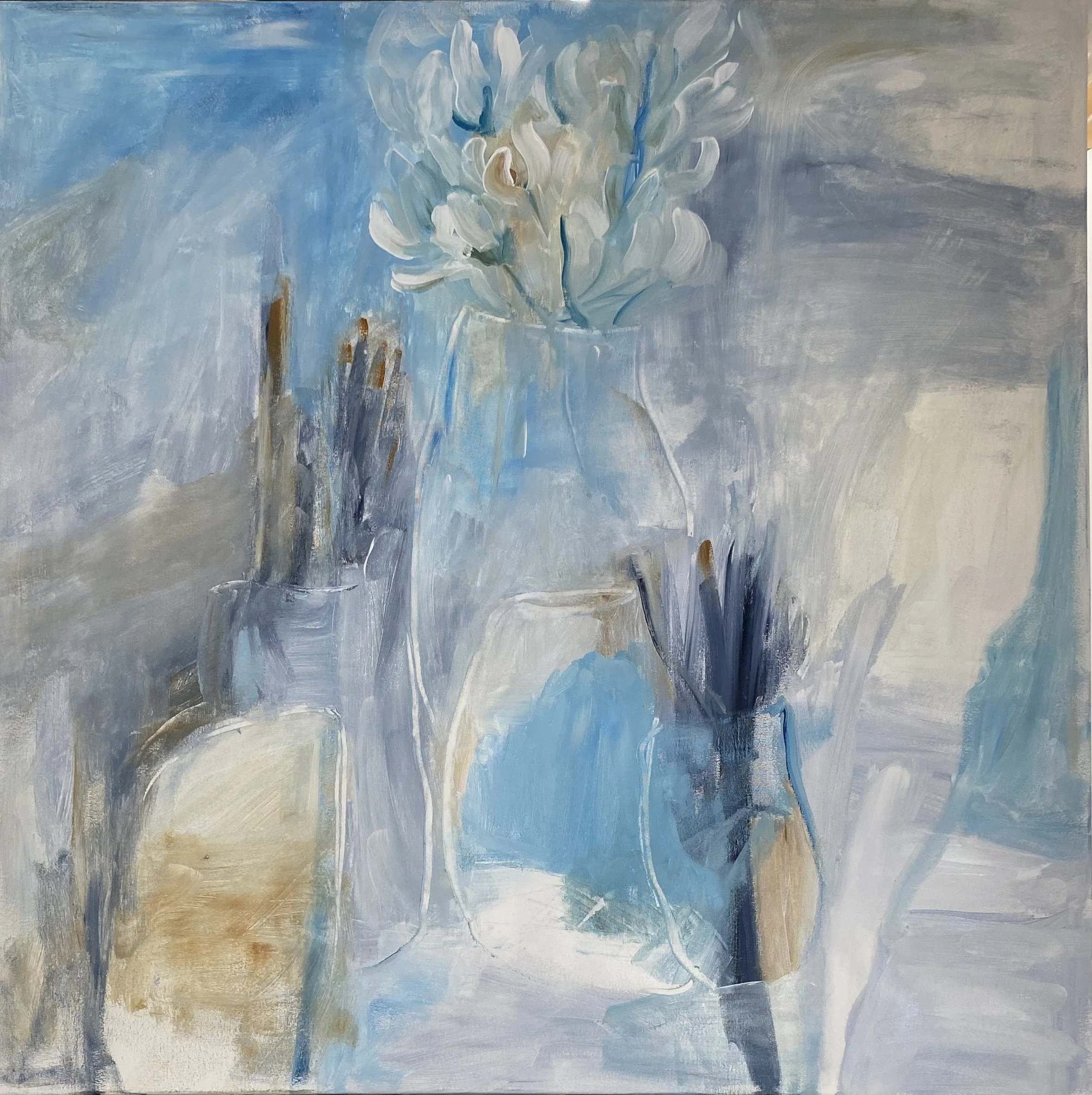
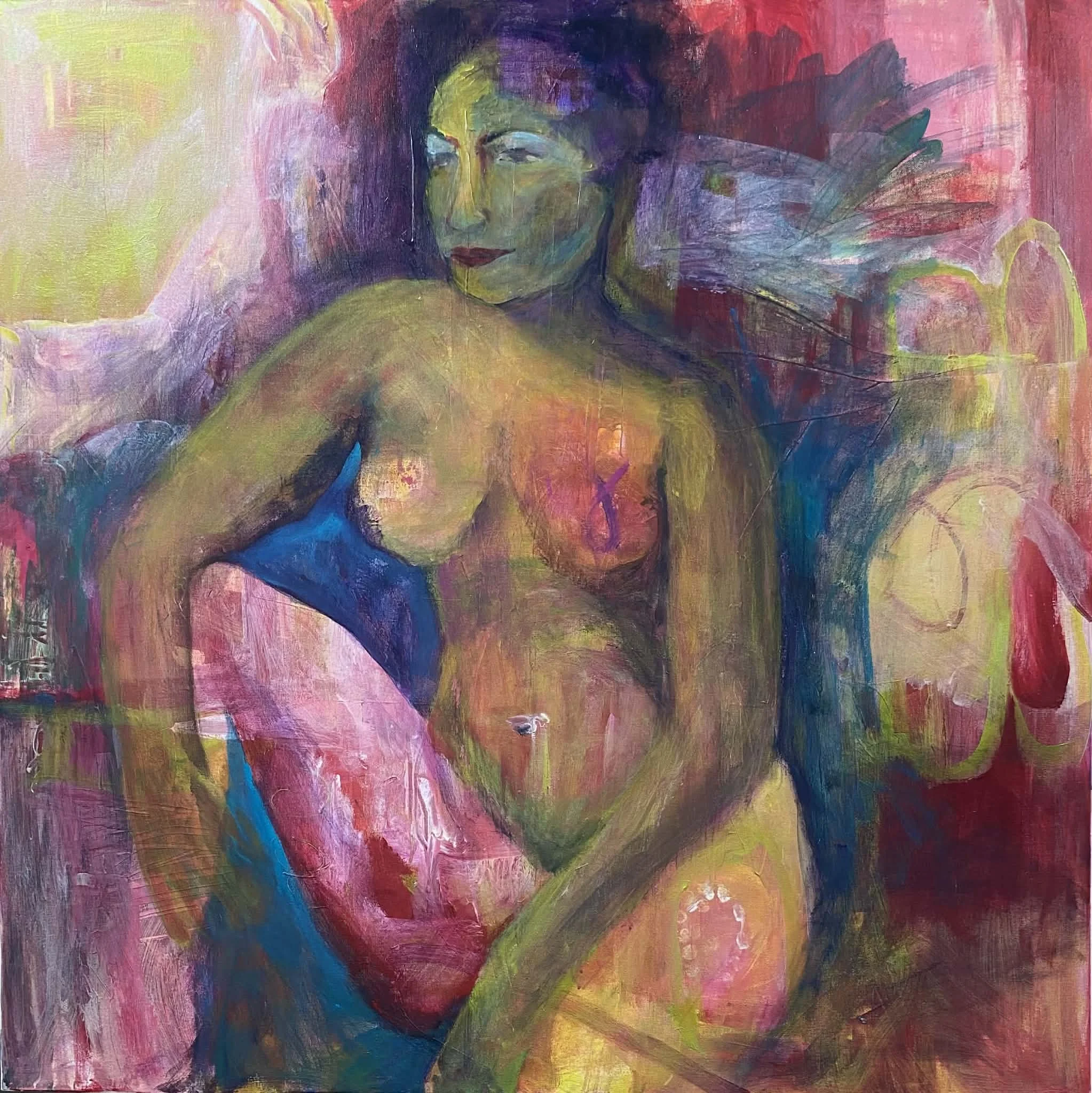
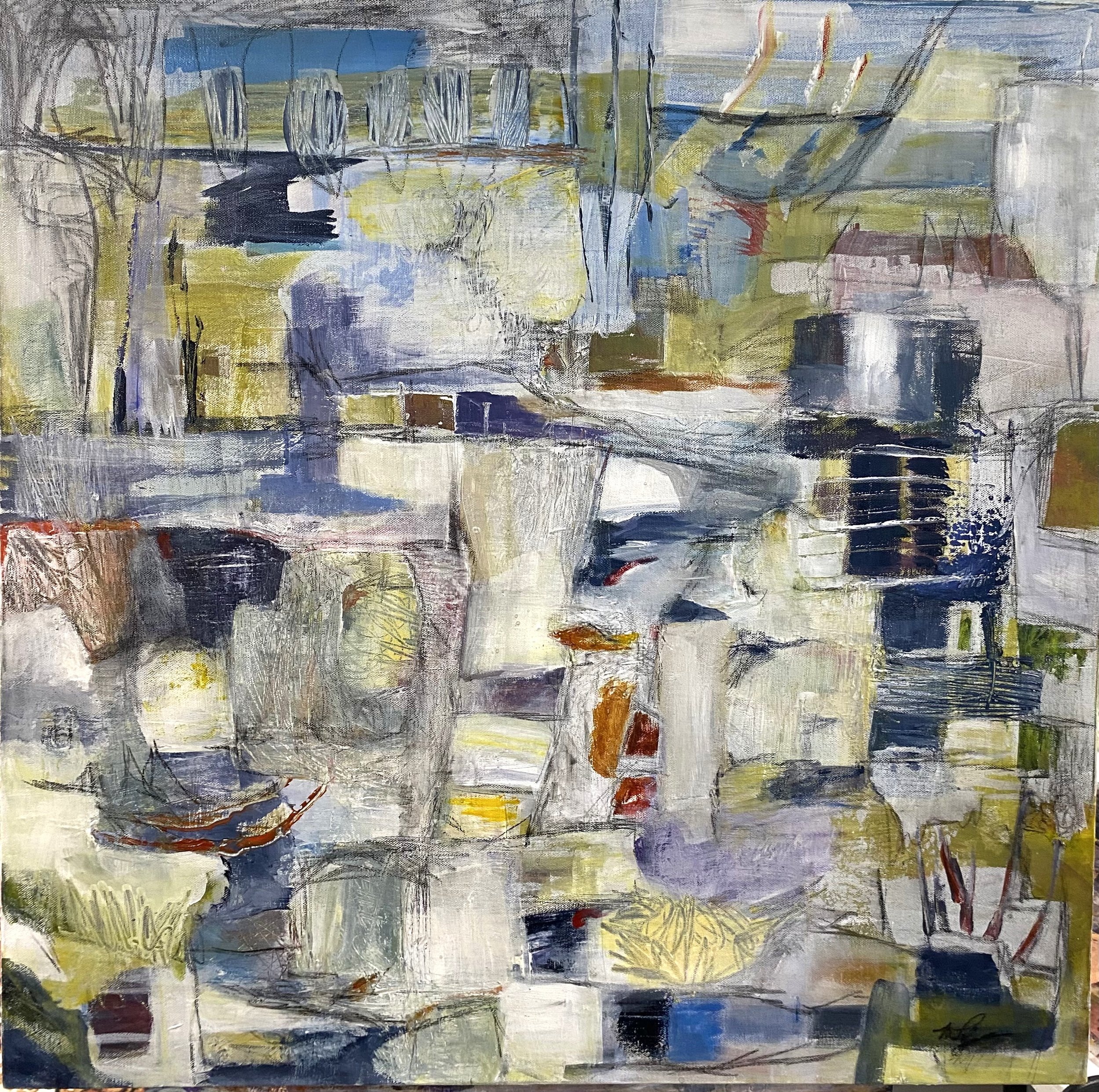
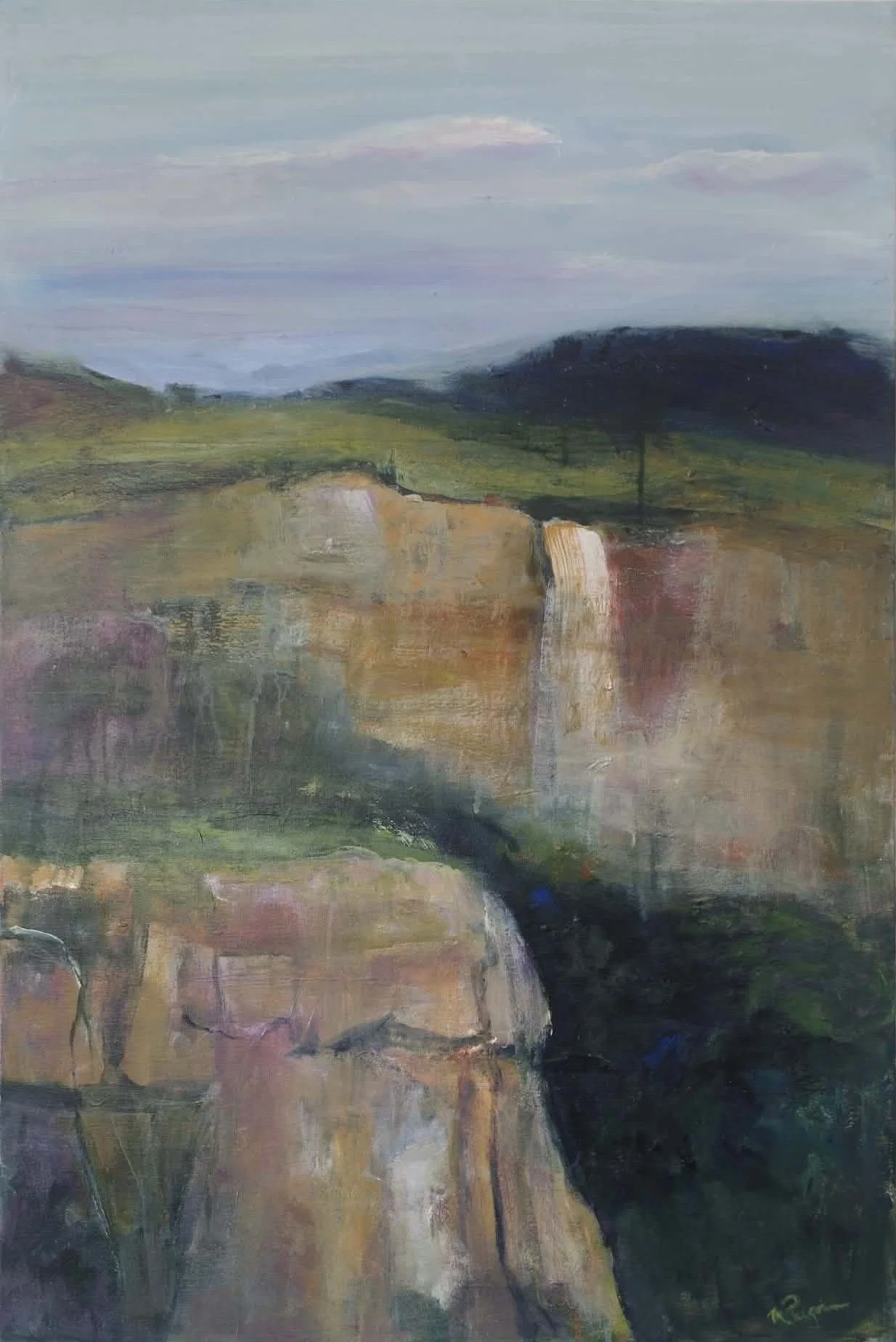
Figures overlap, dissolve, or stretch beyond their outlines; cliffs soften into mist; glass vessels and flowers drift toward abstraction; loops of color weave into dense, rhythmic fields. This permeability is important to me. It reflects the way our identities, surroundings, and histories are constantly influencing one another—never entirely separate, never fully fixed. Color is my primary emotional language. I use contrasts of warm and cool, dense and translucent, to suggest tension and release, depth and openness. Gesture and layering allow me to build and erase, to let earlier decisions show through like half-remembered stories. The result is a surface that feels lived-in: evidence of searching, revising, and listening to what the painting wants to become.
Although specific works may suggest a figure, a shoreline, a vase, or an underwater world, I avoid literal narrative. Instead, I aim to offer viewers a space to recognize their own associations—a posture that feels familiar, a color that recalls a place, a tangle of lines that mirrors the complexity of their own inner life. My hope is that each piece functions less as an illustration and more as a quiet, resonant encounter between the seen and the felt.
The Human Form
Abstraction
Landscapes and Nature
Still Life